ORIGINAL ARTICLE
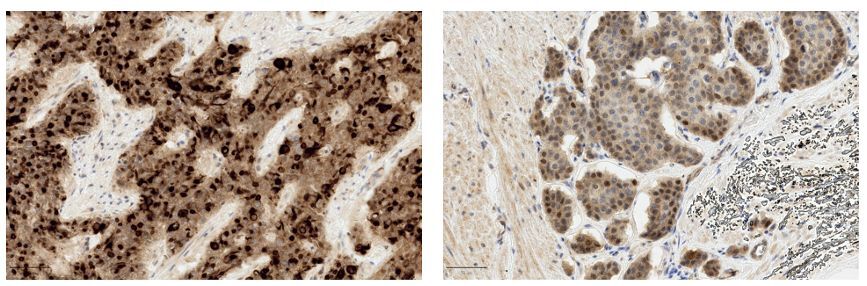
Pumilio2, but not Pumilio1, expression is significantly increased in high-grade and metastatic gastroenteropancreatic neuroendocrine neoplasms
1
Department of Clinical Pathology and Immunology, Poznań University of Medical Sciences, Poznań, Poland
2
1.Institute of Computing Science, Poznan University of Technology, Poznan, Poland
2. Poznan University of Medical Sciences
3
Poznan University of Medical Sciences, Poznan, Poland
4
Mathematics and Information Science, Warsaw University of Technology, Warsaw, Poland
5
Department of Animal Physiology and Biochemistry, Poznan University of Life Sciences, Poznan, Poland
Submission date: 2025-10-29
Final revision date: 2026-04-07
Acceptance date: 2026-04-08
Publication date: 2026-06-08
Corresponding author
Paweł Antoni Kołodziejski
Department of Animal Physiology and Biochemistry Poznan University of Life Sciences Poznan, Poland
Department of Animal Physiology and Biochemistry Poznan University of Life Sciences Poznan, Poland
Pol J Pathol 2026;77(1):62-71

KEYWORDS
TOPICS
ABSTRACT
Pumilio proteins (PUM1 and PUM2) are evolutionarily conserved RNA-binding proteins that regulate gene expression at the post-transcriptional level and have been implicated in tumourigenesis in various cancers. However, their role in gastroenteropancreatic neuroendocrine neoplasms (GEP-NENs) has not been previously investigated. This study aimed to evaluate the expression of PUM1 and PUM2 in GEP-NENs and determine their association with tumour grade and metastatic status.
Transcriptomic data (GSE98894) were analyzed using GEO2R to assess differential gene expression in primary tumours, lymph node metastases, and distant meta- stases. Additionally, immunohistochemical analyses were performed on formalin- fixed paraffin-embedded samples, and protein expression was quantified using digital image analysis. Statistical comparisons were conducted across tumour sites and grades (G1–G3).
At the mRNA level, PUM2 was significantly upregulated in distant metastases compared with primary tumours (log2FC = 0.151; adjusted p = 0.024), whereas PUM1 showed no significant difference. Protein-level analyses confirmed expression of both proteins in all samples; however, only PUM2 was significantly elevated in high-grade (G3) tumours compared to G1/G2.
These findings suggest that PUM2, but not PUM1, is associated with tumour progression in GEP-NENs, although a causal role remains to be established.
REFERENCES (21)
1.
Zhang X Bin, Fan YB, Jing R, Getu MA, Chen WY, Zhang W, et al. Gastroenteropancreatic neuroendocrine neoplasms: current development, challenges, and clinical perspectives. Mil Med Res 2024; 11: 35.
2.
Klimstra DS, Günter K, La Rosa S, Rindi G. Classification of neuroendocrine neoplasms of the digestive system. WHO Classification of tumours, 5 edition, 2019.
3.
Nishanth MJ, Simon B. Functions, mechanisms and regulation of Pumilio/Puf family RNA binding proteins: a comprehensive review. Mol Biol Rep 2020; 47: 785-807.
4.
Smialek MJ, Ilaslan E, Sajek MP, Jaruzelska J. Role of PUM RNA-binding proteins in cancer. Cancers (Basel) 2021; 13: 129.
5.
Alvarez MJ, Subramaniam PS, Tang LH, Grunn A, Aburi M, Rieckhof G, et al. A precision oncology approach to the pharmacological targeting of mechanistic dependencies in neuroendocrine tumors. Nat Genet 2018; 50: 979-989.
6.
Silva ILZ, Kohata AA, Shigunov P. Modulation and function of Pumilio proteins in cancer. Semin Cancer Biol 2022; 86: 298-309.
7.
Dai H, Jiang Y, Liu Z, Su X, Yang Y, Chen Z. Pumilio RNA-binding family member 1 plays a promoting role on pancreatic cancer angiogenesis. Can J Gastroenterol Hepatol 2022; 2022: 9202531.
8.
Guan X, Chen S, Liu Y, Wang L li, Zhao Y, Zong ZH. PUM1 promotes ovarian cancer proliferation, migration and invasion. Biochem Biophys Res Commun 2018; 497: 313-318.
9.
Yin S, Liu H, Zhou Z, Xu X, Wang P, Chen W, et al. PUM1 promotes tumor progression by activating DEPTOR-meditated glycolysis in gastric cancer. Adv Sci 2023; 10: e2301190.
10.
Gor R, Sampath SS, Lazer LM, Ramalingam S. RNA binding protein PUM1 promotes colon cancer cell proliferation and migration. Int J Biol Macromol 2021; 174: 549-561.
11.
Liu Z, Lv C. RNA binding protein PUM2 promotes hepatocellular carcinoma proliferation and apoptosis via binding to the 3’UTR of BTG3. Oncol Lett 2022; 24: 346.
12.
Wang Y, Sun W, Yang J, Yang L, Li C, Liu H, et al. PUM2 promotes glioblastoma cell proliferation and migration via repressing BTG1 expression. Cell Struct Funct 2019; 44: 29-39.
13.
Zhang L, Chen Y, Li C, Liu J, Ren H, Li L, et al. RNA binding protein PUM2 promotes the stemness of breast cancer cells via competitively binding to neuropilin-1 (NRP-1) mRNA with miR-376a. Biomed Pharmacother 2019; 114: 108772.
14.
Hu R, Zhu X, Chen C, Xu R, Li Y, Xu W. RNA-binding protein PUM2 suppresses osteosarcoma progression via partly and competitively binding to STARD13 3UTR with miRNAs. Cell Prolif 2018; 51: e12508.
15.
Chen D, Zheng W, Lin A, Uyhazi K, Zhao H, Lin H. Pumilio 1 suppresses multiple activators of p53 to safeguard spermatogenesis. Curr Biol 2012; 22: 420-425.
16.
Vessey JP, Vaccani A, Xie Y, Dahm R, Karra D, Kiebler MA, et al. Dendritic localization of the translational repressor Pumilio 2 and its contribution to dendritic stress granules. J Neurosci 2006; 26: 6496-6508.
17.
Gilbertson S, Federspiel JD, Hartenian E, Cristea IM, Glaunsinger B. Changes in mRNA abundance drive shuttling of RNA binding proteins, linking cytoplasmic RNA degradation to transcription. Elife 2018; 7: e37663.
18.
Moore FL, Jaruzelska J, Fox MS, Urano J, Firpo MT, Turek PJ, et al. Human Pumilio-2 is expressed in embryonic stem cells and germ cells and interacts with DAZ (Deleted in AZoospermia) and DAZ-like proteins. Proc Natl Acad Sci U S A 2003; 100: 538-543.
19.
Uhlén M, Fagerberg L, Hallström BM, Lindskog C, Oksvold P, Mardinoglu A, et al. Tissue-based map of the human proteome. Science 2015; 347: 1260419.
20.
Melan MA, Sluder G. Redistribution and differential extraction of soluble proteins in permeabilized cultured cells: implications for immunofluorescence microscopy. J Cell Sci 1992; 101: 731-743.
21.
Shi SR, Shi Y, Taylor CR. Antigen retrieval immunohistochemistry. J Histochem Cytochem 2011; 59: 13-32.
| eISSN: | 2084-9869 |
| ISSN: | 1233-9687 |

We process personal data collected when visiting the website. The function of obtaining information about users and their behavior is carried out by voluntarily entered information in forms and saving cookies in end devices. Data, including cookies, are used to provide services, improve the user experience and to analyze the traffic in accordance with the Privacy policy. Data are also collected and processed by Google Analytics tool (more).
You can change cookies settings in your browser. Restricted use of cookies in the browser configuration may affect some functionalities of the website.
You can change cookies settings in your browser. Restricted use of cookies in the browser configuration may affect some functionalities of the website.