REVIEW ARTICLE
Challenging cases of Epstein-Barr virus positive lymphomas
1
Department of Clinical Sciences, Division of Pathology, Faculty of Medicine, Lund University, Sweden
Submission date: 2026-04-24
Acceptance date: 2026-05-02
Publication date: 2026-06-25
Corresponding author
Pol J Pathol 2026;77(2):162-174

KEYWORDS
TOPICS
ABSTRACT
Epstein-Barr virus (EBV)-associated lymphomas can develop in both immuno-
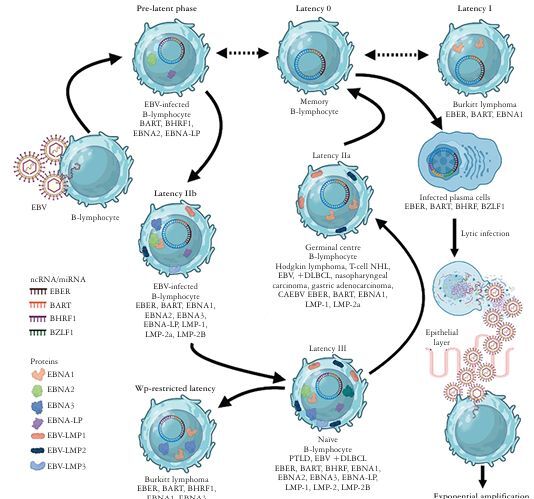
competent and immunocompromised patients, such as those with human immunodeficiency virus (HIV) infection, other primary or acquired immunodeficiencies, or post transplantation. The current World Health Organization classification consolidated immunodeficiency/dysregulation-related lymphoproliferative disorders into three major histopathological categories: hyperplasia, lymphoproliferative disorder of varied malignant potential, and lymphoma; and reporting the histopathological category, the presence or absence of causally associated viruses (EBV, KSHV/HHV-8), and the immune deficiency/dysregulation setting is recommended. In hematopathology practice, EBV is best confirmed by EBV-encoded RNA in situ hybridization, while immunohistochemistry is used as a complementary test for the presence of EBV-related proteins. Often, additional analyses such as fluorescence in situ hybridization and polymerase chain reaction for B- and T-cell clonality have to be applied for the final classification. This review, summarizing a lecture given
at the 10th Course of the Academy of Immunohistochemistry in Cracow, Poland (June 2026), presents some challenging examples of EBV-related lymphomas. Cases include EBV+ mucocutaneous ulcer with subsequent EBV+ diffuse large B-cell lymphoma, EBV+ diffuse large B-cell lymphoma with plasma cell differentiation, post therapy EBV+ Burkitt lymphoma and cutaneous NK/T-cell lymphoma.
REFERENCES (26)
1.
Epstein MA, Achong BG, Barr YM. Virus particles in cultured lymphoblasts from Burkitt lymphoma. Lancet 1964; 1: 702-703.
2.
Wong Y, Meehan MT, Burrows SR, Doolan DL, Miles JJ. Estimating the global burden of Epstein-Barr virus-related cancers. J Cancer Res Clin Oncol 2022; 148: 31-46.
3.
WHO Classification of Tumours Editorial Board. Haematolymphoid tumours [Internet]. International Agency for Research on Cancer, Lyon (France) 2024 (WHO classification of tumours series, 5th ed.; vol. 11). Available from: https://tumourclassification. iarc.who.int/chapters/63 (accessed: 24.04.2026).
4.
Carbone A, Chadburn A, Gloghini A, Vaccher E, Bower M. Immune deficiency/dysregulation -associated lymphoproliferative disorders. Revised classification and management. Blood Rev 2024; 64: 101167.
5.
Hwang J, Suh CH, Won Kim K, Kim HS, Armand P, Huang RY, et al. The incidence of Epstein-Barr virus-positive diffuse large b-cell lymphoma: a systematic review and meta- analysis. Cancers (Basel) 2021; 13: 1785 .
6.
Ziarkiewicz M, Wołosz D, Dzieciątkowski T, Wilczek E, Dwilewicz-Trojaczek J, Jędrzejczak WW, et al. Epstein-Barr virus-positive diffuse large b cell lymphoma in the experience of a tertiary medical center in Poland. Arch Immunol Ther Exp 2016; 64: 159-169.
8.
Bednarska K, Chowdhury R, Tobin JWD, Swain F, Keane C, Boyle S, et al. Epstein-Barr virus-associated lymphomas decoded. Br J Haematol 2024; 204: 415-433.
9.
Datta S, Gogia A, Mallick S. Epstein-Barr virus-associated lymphomas: biology, molecular genomics and precision oncology. Front Oncol 2025; 15: 1677060.
10.
Sample J, Young L, Martin B, Chatman T, Kieff E, Rickinson A, et al. Epstein-Barr virus types 1 and 2 differ in their EBNA-3A, EBNA-3B, and EBNA-3C genes. J Virol 1990; 64: 4084-4092.
11.
Indari O, Ghosh S, Bal AS, James A, Garg M, Mishra A, et al. Awakening the sleeping giant: Epstein-Barr virus reactivation by biological agents. Pathog Dis 2024; 82: ftae002.
12.
Silva JM, Alves CEC, Pontes GS. Epstein-Barr virus: the mastermind of immune chaos. Front Immunol 2024; 15: 1297994.
13.
Dojcinov SD, Venkataraman G, Raffeld M, Pittaluga S, Jaffe ES. EBV positive mucocutaneous ulcer – a study of 26 cases associated with various sources of immunosuppression. Am J Surg Pathol 2010; 34: 405-417.
14.
Swerdlow SH, Campo E, Harris NL, Jaffe ES, Pileri SA, Stein H, et al., eds. WHO Classification of Tumours of Haematopoietic and Lymphoid Tissues. Revised. 4th ed. IARC Press, Lyon 2017.
15.
Daroontum T, Kohno K, Inaguma Y, Okamoto A, Okamoto M, Kimura Y, et al. Epstein-Barr virus (EBV)-positive diffuse large B-cell lymphoma arising in patient with a history of EBV-positive mucocutaneous ulcer and EBV-positive nodal polymorphous B-lymphoproliferative disorder. Pathol Int 2019; 69: 37-41.
16.
Forster M, Fedoriw Y, Tuchman S, Grover N. Epstein-Barr virus mucocutaneous ulcer followed by Hodgkin lymphoma in multiple myeloma patient. Clin Case Rep 2022; 10: e05528.
17.
Zanelli M, Sanguedolce F, Zizzo M, Palicelli A, Pellegrini D, Farinacci S, et al. Primary diffuse large B-cell lymphoma of the urinary bladder: update on a rare disease and potential diagnostic pitfalls. Curr Oncol 2022; 29: 956-968.
18.
Richter J, John K, Staiger AM, Rosenwald A, Kurz K, Michgehl U, et al. Epstein-Barr virus status of sporadic Burkitt lymphoma is associated with patient age and mutational features. Br J Haematol 2022; 196: 681-689.
19.
Ru Y, Chen J, Wu D. Epstein-Barr virus post-transplant lymphoproliferative disease (PTLD) after hematopoietic stem cell transplantation. Eur J Haematol 2018; 101: 283-290.
20.
Ngamdamrongkiat P, Sukpanichnant S, Chairatchaneeboon M, Khuhapinant A, Sitthinamsuwan P. Cutaneous involvement of extranodal NK/T cell lymphoma, nasal type, a clinical and histopathological mimicker of various skin diseases. Dermatopathology (Basel) 2022; 9: 307-320.
21.
Harabuchi Y, Takahara M, Kishibe K, Nagato T, Kumai T. Extranodal natural killer/T-cell lymphoma, nasal type: basic science and clinical progress. Front Pediatr 2019; 7: 141.
22.
Li N, Jiang M, Wu WC, Wei WW, Zou LQ. How to identify patients at high risk of developing nasal-type, extranodal nature killer/T-cell lymphoma-associated hemophagocytic syndrome. Front Oncol 2021; 11: 704962.
23.
Barros MHM, Alves PDS. Contribution of the Epstein-Barr virus to the oncogenesis of mature T-cell lymphoproliferative neoplasms. Front Oncol 2023; 13: 1240359.
24.
Kim HK, Moon SM, Moon JH, Park JE, Byeon S, Kim WS. Complete remission in CD30-positive refractory extranodal NK/T-cell lymphoma with brentuximab vedotin. Blood Res 2015; 50: 254-256.
25.
Mangiaterra T, Chabay P, Bellan C, Lazzi S, Onyango N, Trivedi P, et al. Hit-and-run hypothesis: revisiting the impact of EBV in malignancies. Front Immunol 2026; 17: 1742214.
26.
Quintanilla-Martinez L, Swerdlow SH, Tousseyn T, Barrionuevo C, Nakamura S, Jaffe ES. New concepts in EBV-associated B, T, and NK cell lymphoproliferative disorders. Virchows Arch 2023; 482: 227-244.
Share
RELATED ARTICLE
| eISSN: | 2084-9869 |
| ISSN: | 1233-9687 |

We process personal data collected when visiting the website. The function of obtaining information about users and their behavior is carried out by voluntarily entered information in forms and saving cookies in end devices. Data, including cookies, are used to provide services, improve the user experience and to analyze the traffic in accordance with the Privacy policy. Data are also collected and processed by Google Analytics tool (more).
You can change cookies settings in your browser. Restricted use of cookies in the browser configuration may affect some functionalities of the website.
You can change cookies settings in your browser. Restricted use of cookies in the browser configuration may affect some functionalities of the website.